
Reconciliation
What is the Sacrament of Reconciliation?
The Sacrament of Reconciliation goes by a few names: Reconciliation, Confession, and Penance. This sacrament is about healing and forgiveness. It is a way for us to acknowledge our sins, seek God’s forgiveness, and receive grace to live a more holy life. During the sacrament, we confess our sins to a priest who acts in the person of Christ and offers us absolution.
Those who approach the Sacrament of Penance obtain pardon from God’s mercy for the offense committed against him, and are, at the same time, reconciled with the Church which they have wounded by their sins and which by charity, by example, and by prayer, labors for their conversion. Catechism of the Catholic Church 1422
Confession Times
Saturday: 3:15 PM – 3:45 PM
Sunday: 9:45 AM – 10:15 AM
Sunday: 4:15 PM – 4:45 PM
Monday – Friday: 8:30 AM
Or make an appointment:
Phone: 630-553-6671
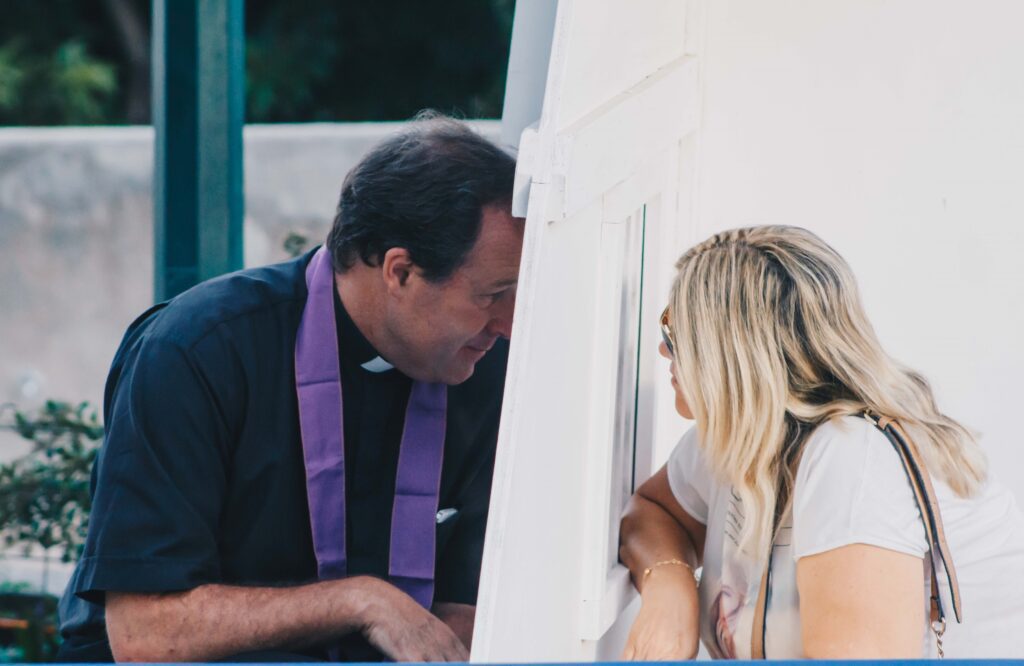
- Examine your conscience ahead of time, which involves reflecting on your thoughts, words, and actions, and then assessing how they align with the teachings of the Church. This self-reflection can be done through prayer, reading the Bible, or using an examination of conscience guide like this.
- Once in the confessional, start by making the sign of the cross (In the name of the Father, Son, and Holy Spirit. Amen.) and say, “Bless me Father for I have sinned. My last confession was…(insert amount of time in weeks, months, or years). Do not be self-conscious about how long it has been. The priest is always simply excited that you are there. If you need help making a good confession or are nervous, let the priest know and ask for help! He will guide you through it.
- Confess your sins. Do not be self-conscious if you are confessing repeated sins over and over again. As Pope Francis once said, “God never tires of forgiving us; we are the ones who tire of seeking his mercy.” Once you are done confessing, say, “I am sorry for all these sins and the ones I have forgotten.”
- Receive a Penance. After hearing your personal situation, the priest will assign you a penance. This is often a specific prayer, or maybe an act of service, etc. You should complete this after you leave the confessional.
- Act of Contrition. Next, the priest will ask you to pray an Act of Contrition. This means expressing your sorrow for your sins and your desire to make things right. This act of contrition can be said in your own words or using a traditional prayer, such as this one.
- Absolution. The priest will then say the prayer of Absolution, absolving you from your sins. All you have to do is make the sign of the cross and say, “Amen” at the end. He may say a few more words of encouragement before you leave.
- Complete your penance. Once you leave the confessional, complete your penance as soon as you can. You will probably feel so much lighter with that weight of sin being lifted through God’s mercy.
There are many reasons why we should go to reconciliation, but perhaps the most important is that it is a way to receive God’s mercy and forgiveness. When we confess our sins, we acknowledge that we are imperfect and in need of God’s grace. Receiving the Sacrament of Reconciliation helps us to be reconciled with God and with the Church, and to receive the grace we need to live a holy life.
In addition to receiving forgiveness, going to Confession also helps us to grow in self-awareness and humility. It is a way to confront our weaknesses and faults and to seek help in overcoming them. It also helps us to be accountable to ourselves and to the community of believers.
One of the most common concerns that people have about going to confession is that the priest will judge them or think less of them. However, it is important to remember that the priest is acting in the person of Christ and is there to offer us mercy and forgiveness. He is bound by the seal of confession, which means that he cannot reveal what is said in the confessional.
Priests have heard many confessions and are well aware of the struggles and challenges that people face in their spiritual lives. They are there to offer guidance, support, and encouragement, and to help us to grow in holiness. Whatever we confess to the priest, we can be assured that he is there to offer us God’s mercy and love.
Child
Your child is eligible to receive the Sacrament of Reconciliation beginning in the 2nd grade and has been enrolled in our Family Formation program for two consecutive years. Preparation classes will be offered during the second year. The reception of the sacrament will be held in the springtime before First Holy Communion. For more information on the sacramental prep process for your child, please visit our Faith Formation page and contact our Sacrament Coordinator, Kara Baughman, at 630-553-6671 or email faithformation@stpatrickyorkville.org.
High School or Adult
If you are in High School or are an adult, please see our Becoming Catholic page and contact the Parish Office by emailing ocia@stpatrickyorkville.org or calling 630-553-6671 for more information.